
HIFU, in focus
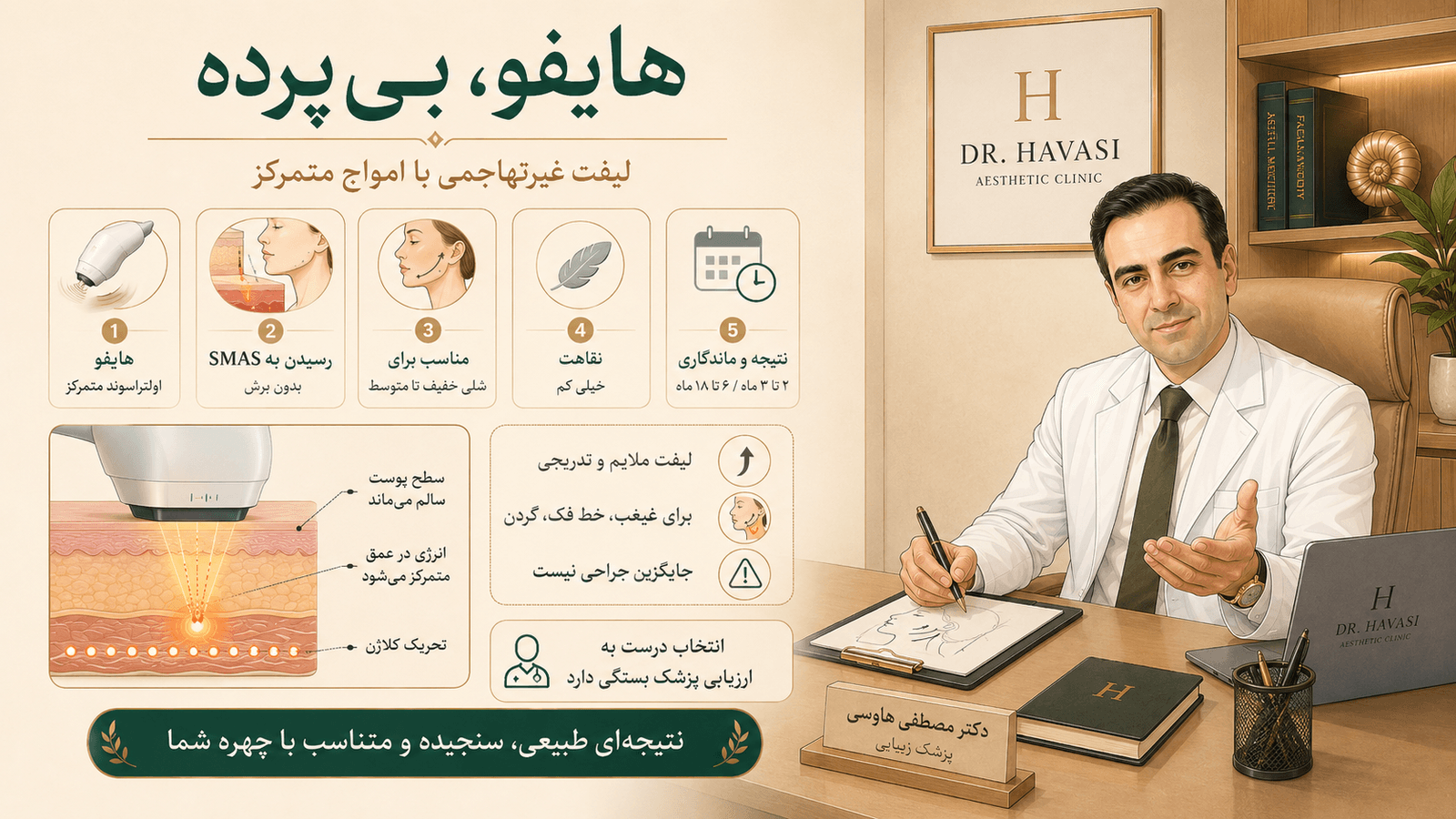
The idea behind HIFU is almost strange the first time you hear it: reach the deep layer a surgeon tightens in a facelift — without breaking the skin at all — using nothing but focused sound. It genuinely can. What it can’t do is the part worth understanding before you book.
HIFU stands for high-intensity focused ultrasound, and the word that matters is focused. The device sends ultrasound energy through the surface of the skin and converges it at a precise depth below, where it briefly heats a pinpoint of tissue to around sixty-five degrees. The skin on top is passed straight through and left untouched; the effect happens only where the beams meet.
The layer a facelift uses
What makes it interesting is where those points land. At its deepest setting HIFU reaches the SMAS — the firm, fibrous sheet beneath the fat that a surgeon actually lifts and stitches in a facelift. Heating it makes the collagen already there contract at once, and over the following weeks the small controlled injuries prompt the skin to lay down new collagen and elastin of its own. Shallower passes tighten the dermis and refine the surface.
It borrows the target of a facelift, and asks the body to do the lifting slowly.
There are no needles and no cuts, so there is nothing to recover from in the usual sense — most people walk straight back into their day. In honesty, though, the treatment itself can be uncomfortable: a deep prickling heat as each line is placed, because the energy is working exactly where nerves and tissue are dense. A little tenderness or mild swelling for a day or two is normal, and passes.
What it lifts, and what it won’t
HIFU suits mild to moderate laxity — a softening jawline, early jowls, a heavy brow, loose skin under the chin or on the neck — most often in people from their late thirties into their fifties. It gives a real but measured lift, the kind counted in percentages rather than decades. If the skin and deeper tissue have genuinely descended, it will underwhelm you, and an honest clinic will point you toward surgery rather than sell you a result the machine can’t give.
It also rewards patience. A faint tightening shows early, but the true change builds across two to three months as collagen forms, and the effect generally holds somewhere between six months and a year and a half before a maintenance session is worth considering. It is upkeep, not a one-time fix.
Why the operator matters more than the machine
Because you can’t see where the energy lands, HIFU depends entirely on someone who knows the anatomy beneath your skin — which depth, which lines, which areas to leave alone. The same tool that sharpens a jawline can, aimed carelessly, thin the very fat that keeps a face looking young. So the appointment that counts is the honest one: where we map your face, tell you plainly whether HIFU is the right answer, and are just as willing to say it isn’t.
Frequently asked questions
Is HIFU painful?
You feel a deep prickling heat as each line of energy is placed; most people tolerate it well, and any tenderness settles within a day or two.
Is there any downtime?
Very little — there are no needles or cuts, so most people return to their day at once, sometimes with mild swelling for a day or two.
When will I see results, and how long do they last?
A faint lift shows early, but the real change builds over two to three months as new collagen forms, and typically lasts six months to about a year and a half.
Where can I have HIFU in Karaj?
HIFU is performed by Dr. Mostafa Havasi at the Azimieh clinic in Karaj (with a second clinic in Tehran, Chitgar); a private consultation confirms whether it’s the right lift for you.